
Compare cars
Pick up to 3 cars to see how they stack up on score, price and specs.
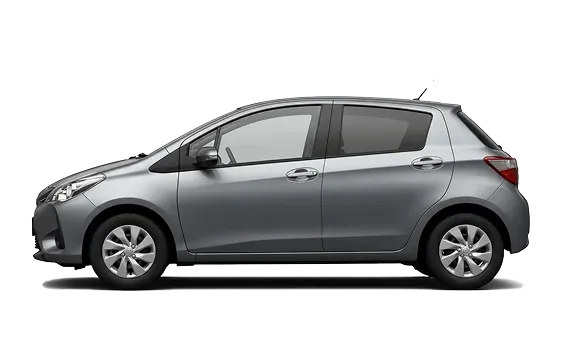
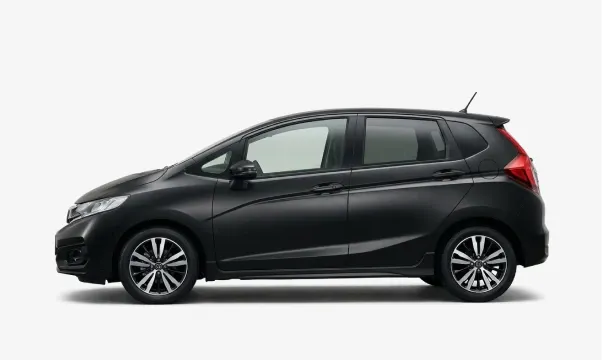
Honda Fit
Incredibly fuel-efficient urban hatchback with Magic Seats and sub-1,500 cc duty savings.
Highest rated
Toyota VitzHonda Fit
Mandai score
7/10
8.5/10
Typical price
KSh 1,350,000
KSh 1,800,000
Years
2017-2020
2017-2023
Body type
Compact Hatchbacks
–
Fuel
Petrol, Hybrid
Petrol, Hybrid
Transmission
Automatic, CVT
Automatic, CVT
Doors
5
5
Most popular trim
Vitz 1.0 F / 1.3 F / 1.5 Hybrid F / Jewela
Fit 1.3L Home / Fit e:HEV Hybrid Luxe
Dealer listings
None listed
None listed
Dimensions
Length
3,945 mm
3,990 mm (GK) / 4,040 mm (GR)
Width
1,695 mm
1,695 mm
Height
1,500 mm
1,525 mm
Wheelbase
2,510 mm
2,530 mm
Ground clearance
145 mm
145 mm
Boot space
286 L (750 L folded)
304 L (1,205 L folded)
Kerb weight
970 kg (1,110 kg Hybrid)
1,070 kg (Petrol) / 1,200 kg (Hybrid)
Seats
5
5
Specifications
Engine
1.0L 1KR-FE / 1.3L 1NR-FKE / 1.5L 1NZ-FXE Hybrid
1.3L L13B i-VTEC / 1.5L e:HEV Hybrid
Power
69 hp (1.0L) / 99 hp (1.3L) / 100 hp combined (1.5L Hybrid)
100 hp (1.3L) / 109 hp combined (e:HEV)
Torque
92 Nm (1.0L) / 121 Nm (1.3L) / 111 Nm (1.5L Hybrid)
119 Nm (1.3L) / 253 Nm electric motor torque (e:HEV)
Drivetrain
Front-Wheel Drive / 4WD
Front-Wheel Drive
0–100 km/h
11.5 sec (1.3L) / 12.0 sec (1.5L Hybrid) / 14.5 sec (1.0L)
10.2 sec (1.3L) / 9.4 sec (e:HEV)
Top speed
170 km/h
180 km/h
Fuel economy
Combined
20.8 km/L (1.0L) / 25.0 km/L (1.3L) / 34.4 km/L (1.5L Hybrid JC08)
18.5 km/L (1.3L) / 28.0 km/L (e:HEV Hybrid)
City
17.5 km/L (1.0L) / 21.0 km/L (1.3L) / 30.0 km/L (1.5L Hybrid)
15.5 km/L (1.3L) / 26.5 km/L (e:HEV Hybrid)
Highway
23.5 km/L (1.0L) / 28.0 km/L (1.3L) / 36.0 km/L (1.5L Hybrid)
21.0 km/L (1.3L) / 29.5 km/L (e:HEV Hybrid)
Tank size
42 L (Petrol) / 36 L (Hybrid)
40 L
CO₂ emissions
110 g/km (1.0L) / 82 g/km (Hybrid)
98 g/km (Hybrid)
At a glance
Model
Toyota Vitz (XP130 Series 2nd Facelift)
Honda Fit (GK3/GK5 & GR1/GR3 Series)
Production years
2017–2020
2017–2023
Body type
5-Door Subcompact Hatchback
5-Door Compact Hatchback
Seating capacity
5
5
Fuel types
Petrol, Full Hybrid (THS-II)
Petrol (i-VTEC), Full Hybrid (e:HEV)
Engine sizes
996 cc (1.0L) / 1,329 cc (1.3L) / 1,496 cc (1.5L Hybrid)
1,317 cc / 1,496 cc
Transmission
Super CVT-i Automatic / e-CVT
CVT Automatic / e-CVT
Drivetrain
FWD or 4WD
FWD or Real Time AWD
Ground clearance
145 mm
145 mm (150 mm Crosstar)
Source market
Japan (RHD)
Japan (RHD)
Pros and cons
What’s good
- Gold standard city fuel saver: 20.0+ km/L on petrol models and up to 30.0+ km/L on 1.5L Hybrid variants.
- Lowest KRA import duty bracket: 1.0L and 1.3L engines sit in the lowest customs tax valuation category.
- Top-tier resale value retention: Exceptional liquidity and universal spare parts availability across Kenya.
- Nimble 4.5-meter turning radius: Effortlessly parks and navigates tight Nairobi urban traffic.
- Magic Seat versatility: Rear seat cushions flip up or fold flat to carry tall cargo and bicycles.
- Sub-1,500 cc import duty advantage: Qualifies for KRA's lowest customs tax valuation bracket.
- Exceptional e:HEV fuel efficiency: Delivers up to 28.0 km/L in stop-and-go Nairobi city traffic.
What’s not so good
- 1.0L engine can feel sluggish on steep highway climbs: 69 hp 1KR-FE labors when fully loaded ascending Limuru hills.
- Low 145 mm ground clearance: Requires cautious driving over tall speed bumps.
- 145 mm ground clearance: Requires slow navigation over steep estate speed bumps when fully loaded.
- Third-generation DCT hybrid recall history: 2014–2016 i-DCD dual-clutch models require transmission software check.