
Compare cars
Pick up to 3 cars to see how they stack up on score, price and specs.
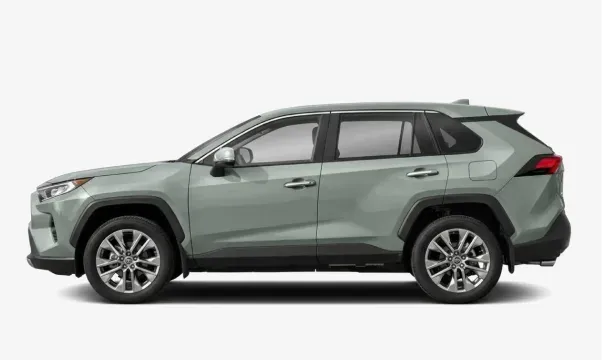
Toyota RAV4
Modern TNGA platform entry offering supreme utility options, 200 mm ground clearance, Dynamic Torque Vectoring AWD, and 21.0 km/L hybrid efficiency.
Highest ratedBest value
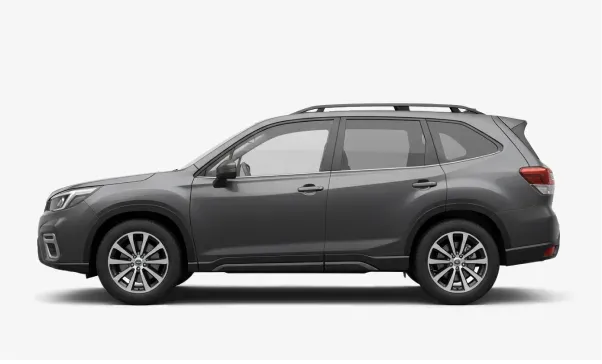
Toyota RAV4Subaru Forester
Mandai score
9/10
7/10
Typical price
KSh 4,800,000
KSh 4,200,000
Years
2019-2023
2018-2023
Body type
Mid-size SUV
Mid-size SUV
Fuel
Petrol, Hybrid
Petrol, Hybrid
Transmission
Automatic, CVT
Automatic, CVT
Doors
5
5
Most popular trim
RAV4 2.0 Adventure / 2.5 Hybrid G / Limited E-Four
Forester Touring / Sport / Premium / e-Boxer Advance
Dealer listings
None listed
None listed
Dimensions
Length
4,600 mm (Adventure: 4,610 mm)
4,625 mm
Width
1,855 mm (Adventure: 1,865 mm)
1,815 mm
Height
1,685 mm
1,730 mm
Wheelbase
2,690 mm
2,670 mm
Ground clearance
200 mm
220 mm
Boot space
580 L (1,690 L folded)
520 L (1,775 L folded)
Kerb weight
1,570 kg (1,680 kg Hybrid)
1,570 kg
Seats
5
5
Specifications
Engine
2.0L M20A-FKS Dynamic Force / 2.5L A25A-FXS Hybrid
2.5L FB25 Direct Injection Boxer / 1.8L CB18 DIT Turbo
Power
171 hp (2.0L) / 222 hp combined (2.5L Hybrid E-Four)
182 hp @ 5,800 rpm (2.5L) / 177 hp (1.8T)
Torque
207 Nm (2.0L) / 221 Nm (2.5L Hybrid)
239 Nm @ 4,400 rpm (2.5L) / 300 Nm (1.8T)
Drivetrain
Front-Wheel Drive / Dynamic Torque Vectoring AWD / E-Four
Symmetrical All-Wheel Drive (SAWD)
0–100 km/h
8.1 sec (2.5L Hybrid) / 9.5 sec (2.0L)
8.2 sec
Top speed
200 km/h
204 km/h
Fuel economy
Combined
15.2 km/L (2.0L Petrol) / 21.0 km/L (2.5L Hybrid)
14.2 km/L (2.5L) / 15.2 km/L (1.8T) / 17.0 km/L (e-Boxer)
City
12.8 km/L (2.0L Petrol) / 20.0 km/L (2.5L Hybrid)
11.8 km/L (2.5L) / 12.5 km/L (1.8T) / 15.0 km/L (e-Boxer)
Highway
17.5 km/L (2.0L Petrol) / 22.0 km/L (2.5L Hybrid)
16.8 km/L (2.5L) / 18.0 km/L (1.8T) / 18.5 km/L (e-Boxer)
Tank size
55 L
63 L
CO₂ emissions
138 g/km (2.0L) / 102 g/km (Hybrid)
152 g/km
At a glance
Model
Toyota RAV4 (XA50 Series)
Subaru Forester (SK Series)
Production years
2019–2023
2018–2023
Body type
5-Door Compact Utility Crossover
SUV / Crossovers
Seating capacity
5
5
Fuel types
Petrol (Dynamic Force), Full Hybrid (THS-II)
Petrol, e-Boxer Hybrid
Engine sizes
1,986 cc (2.0L M20A-FKS) / 2,487 cc (2.5L A25A-FXS Hybrid)
1,795 cc (1.8T CB18) / 1,995 cc (2.0L e-Boxer) / 2,498 cc (2.5L FB25)
Transmission
Direct Shift-CVT / e-CVT
Automatic (Lineartronic CVT)
Drivetrain
FWD or Dynamic Torque Vectoring AWD / E-Four
Symmetrical All-Wheel Drive (SAWD)
Ground clearance
200 mm
220 mm
Source market
Japan / UK (RHD)
Japan / UK (RHD)
Pros and cons
What’s good
- Modern TNGA platform entry: Superior chassis rigidity, sharp handling, and excellent ride refinement on local roads.
- Sub-2,500 cc KRA duty advantage: All 2.0L Petrol and 2.5L Hybrid variants qualify for the lower 25% excise tax bracket.
- High 200 mm ground clearance: Easily clears deep potholes, tall speed bumps, and rough upcountry estate roads.
- 21.0 km/L hybrid efficiency: Exceptional fuel savings in heavy Nairobi bumper-to-bumper traffic jams.
- Class-leading 220 mm ground clearance: Conquers deep potholes, tall speed bumps, and rough upcountry tracks.
- Symmetrical AWD with Dual X-Mode: Exceptional mud, snow, and deep gravel traction.
- Sub-2,500 cc KRA tax advantage: All 1.8T, 2.0L, and 2.5L engines qualify for 25% excise tax rate.
What’s not so good
- High KRA CRSP customs valuation: Substantial import duty investment compared to earlier 4th-gen RAV4 models.
- Wind noise at high highway speeds: Minor cabin wind rustle around side mirrors over 120 km/h.
- Lineartronic CVT response: CVT engine revs during heavy highway mountain passes.
- EyeSight windshield camera care: Requires specialized recalibration if windscreen is replaced.