
Compare cars
Pick up to 3 cars to see how they stack up on score, price and specs.
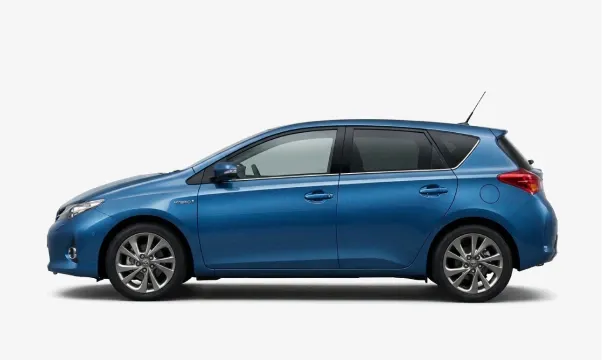
Toyota Auris
Highly durable Japanese hatchback transitioning later into the Corolla Sport line, featuring Valvematic power and sub-1,500 cc duty savings.
Highest ratedBest value
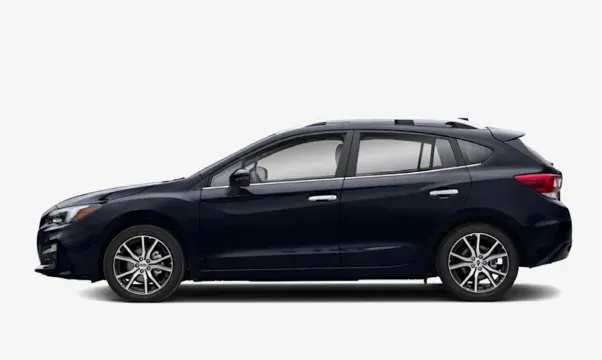
Toyota AurisSubaru Impreza
Mandai score
8/10
7.5/10
Typical price
KSh 1,950,000
KSh 2,050,000
Years
2017-2020
2017-2023
Body type
Compact Hatchbacks
Compact Hatchbacks
Fuel
Petrol, Hybrid
Petrol
Transmission
Automatic, CVT
Automatic, CVT
Doors
5
45
Most popular trim
Auris 1.5 150X S Package / Hybrid G
Impreza 1.6i-L / 2.0i-S EyeSight / Sport
Dealer listings
None listed
None listed
Dimensions
Length
4,330 mm
4,475 mm (Hatch) / 4,640 mm (Saloon)
Width
1,760 mm
1,775 mm
Height
1,480 mm
1,480 mm
Wheelbase
2,600 mm
2,670 mm
Ground clearance
140 mm
130 mm
Boot space
360 L (1,200 L folded)
385 L (1,240 L folded)
Kerb weight
1,270 kg
1,340 kg
Seats
5
5
Specifications
Engine
1.5L 1NZ-FE / 1.2L 8NR-FTS Turbo / 1.8L 2ZR-FXE Hybrid
2.0L FB20 Direct Injection Boxer 4-Cylinder Petrol
Power
109 hp (1.5L) / 116 hp (1.2T) / 136 hp combined (Hybrid)
154 hp @ 6,000 rpm
Torque
136 Nm (1.5L) / 185 Nm (1.2T) / 142 Nm (Hybrid)
196 Nm @ 4,000 rpm
Drivetrain
Front-Wheel Drive
Symmetrical All-Wheel Drive (SAWD)
0–100 km/h
10.0 sec (1.2T) / 10.9 sec (1.5L)
9.2 sec
Top speed
190 km/h
197 km/h
Fuel economy
Combined
16.0 km/L (1.5L Petrol) / 17.5 km/L (1.2T) / 26.0 km/L (1.8L Hybrid)
15.8 km/L (2.0L) / 17.2 km/L (1.6L)
City
13.5 km/L (1.5L Petrol) / 14.5 km/L (1.2T) / 25.0 km/L (1.8L Hybrid)
13.0 km/L (2.0L) / 14.5 km/L (1.6L)
Highway
18.5 km/L (1.5L Petrol) / 20.0 km/L (1.2T) / 27.5 km/L (1.8L Hybrid)
18.5 km/L (2.0L) / 20.0 km/L (1.6L)
Tank size
50 L (Petrol) / 45 L (Hybrid)
50 L
CO₂ emissions
128 g/km (1.5L) / 86 g/km (Hybrid)
136 g/km
At a glance
Model
Toyota Auris / Corolla Sport (E180 / E210 Series)
Subaru Impreza (GK / GT Series)
Production years
2017–2020
2017–2023
Body type
5-Door Compact Hatchback
Hatchbacks / Saloons
Seating capacity
5
5
Fuel types
Petrol, Full Hybrid (THS-II)
Petrol
Engine sizes
1,196 cc (1.2T) / 1,496 cc (1.5L) / 1,797 cc (1.8L Hybrid)
1,599 cc (1.6L FB16) / 1,995 cc (2.0L FB20)
Transmission
Super CVT-i Automatic
Automatic (Lineartronic CVT)
Drivetrain
Front-Wheel Drive (FWD) or 4WD
Symmetrical All-Wheel Drive (SAWD)
Ground clearance
140 mm
130 mm
Source market
Japan (RHD)
Japan (RHD JDM spec)
Pros and cons
What’s good
- High durability and resale demand: Proven Toyota mechanicals ensure minimal depreciation in local markets.
- Sub-1,500 cc tax advantage: 1.2T and 1.5L variants qualify for lower KRA import duty valuation.
- Outstanding 26.0 km/L hybrid efficiency: 1.8L THS-II hybrid eliminates daily fuel costs in Nairobi traffic.
- Seamless transition to Corolla Sport: Shares core mechanical components with late-model Toyota hatchbacks.
- Standard Symmetrical AWD: Superior grip during heavy downpours on Nairobi tarmac.
- Subaru Global Platform (SGP): Rigid chassis delivers sharp handling and quiet cabin refinement.
- Sub-2,000 cc KRA tax advantage: 1.6L and 2.0L engines qualify for 25% excise tax rate.
What’s not so good
- Low 140 mm ground clearance: Requires cautious driving over tall speed bumps and unpaved estate access roads.
- Rear legroom: Rear passenger space is adequate for city hops but slightly tighter than a Premio.
- 130 mm ground clearance: Low ride height requires care over tall speed bumps.
- CVT responsiveness: Lineartronic CVT prioritizes fuel economy over aggressive acceleration.