
Compare cars
Pick up to 3 cars to see how they stack up on score, price and specs.
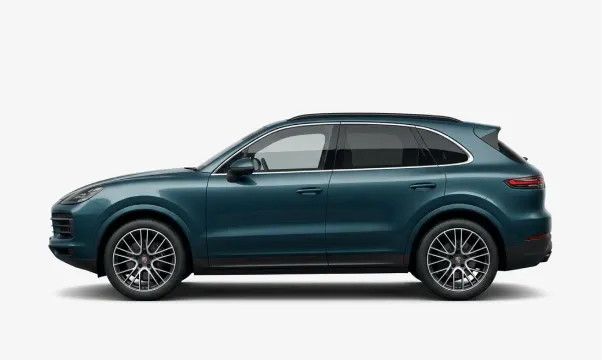
Porsche Cayenne
Premium performance SUV standard with high-clearance engineering, 462 hp E-Hybrid tech, and sports car DNA.
Highest ratedBest value
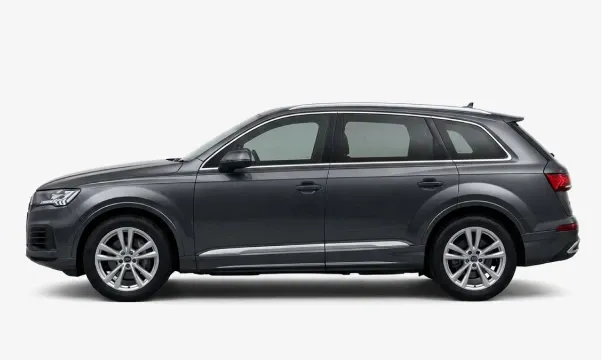
Porsche CayenneAudi Q7
Mandai score
9/10
8.5/10
Typical price
KSh 11,500,000
KSh 680,000,011,500,000
Years
2017-2023
2017-2023
Fuel
Petrol, Plug-in hybrid
Petrol, Diesel
Transmission
Automatic
Automatic
Doors
5
5
Most popular trim
Cayenne Base / E-Hybrid / Cayenne S / GTS / Turbo
Q7 2.0 TFSI / 3.0 TFSI Quattro S Line
Dealer listings
None listed
None listed
Fuel and running cost
Fuel consumption
27.0 km/L3.7 L/100km combined · about 2025 km a tank
12.5 km/L8.0 L/100km combined · about 1063 km a tank
Running cost
KSh 841 / 100 kmKSh 8 a km · KSh 8,406 for 1,000 km · petrol
KSh 1,816 / 100 kmKSh 18 a km · KSh 18,157 for 1,000 km · petrol
Dimensions
Length
4,918 mm (SUV) / 4,931 mm (Coupe)
5,052 mm
Width
1,983 mm
1,968 mm
Height
1,696 mm
1,741 mm
Wheelbase
2,895 mm
2,994 mm
Ground clearance
210 mm (up to 245 mm with Air Suspension)
210 mm
Boot space
770 L (645 L Hybrid, 1,710 L folded)
295 L (7 seats) / 770 L (5 seats)
Kerb weight
2,060 kg (2,295 kg Hybrid)
2,070 kg
Seats
4 or 5
7
Specifications
Engine
3.0L V6 Turbo / 2.9L Twin-Turbo V6 / 4.0L Twin-Turbo V8 + PHEV
3.0L V6 TFSI Supercharged / Mild Hybrid
Power
340 hp to 670 hp (Variant dependent)
333 hp @ 5,500–6,500 rpm
Torque
450 Nm to 900 Nm
440 Nm @ 2,900–5,300 rpm
Drivetrain
Porsche Traction Management (PTM) AWD
Quattro Permanent All-Wheel Drive
0–100 km/h
3.3 sec (Turbo GT) – 6.2 sec (Base)
6.1 sec
Top speed
245 km/h – 300 km/h
250 km/h
Fuel economy
Combined
27.0 km/L (E-Hybrid) / 10.8 km/L (3.0 Petrol Base) / 8.5 km/L (4.0 V8)
12.5 km/L (2.0T) / 10.5 km/L (3.0T V6)
City
22.0 km/L (E-Hybrid) / 8.8 km/L (3.0 Petrol Base) / 6.5 km/L (4.0 V8)
10.0 km/L (2.0T) / 8.5 km/L (3.0T V6)
Highway
30.0 km/L (E-Hybrid) / 12.5 km/L (3.0 Petrol Base) / 10.2 km/L (4.0 V8)
14.5 km/L (2.0T) / 12.5 km/L (3.0T V6)
Tank size
75 L (Hybrid) / 85 L (Petrol Base & S) / 90 L (GTS / Turbo)
85 L
CO₂ emissions
75 g/km (Hybrid)
179 g/km
At a glance
Model
Porsche Cayenne (E3 9YA Series)
Audi Q7 (4M Series)
Production years
2017–2023
2017–2023
Body type
Luxury Performance SUV
5-Door Flagship 7-Seater Luxury SUV
Seating capacity
4 or 5
7 seats
Fuel types
Petrol, Plug-In Hybrid (PHEV)
Petrol (TFSI), Clean Diesel (TDI)
Engine sizes
2,894 cc (2.9L V6) / 2,995 cc (3.0L V6) / 3,996 cc (4.0L V8)
1,984 cc / 2,995 cc / 2,967 cc
Transmission
Automatic (8-Speed Tiptronic S)
8-speed Tiptronic Automatic
Drivetrain
Porsche Traction Management (PTM) AWD
Quattro Permanent All-Wheel Drive
Ground clearance
210 mm (up to 245 mm with Air Suspension)
210 mm (up to 245 mm with air suspension)
Source market
UK / Japan (RHD)
Japan / UK (RHD)
Pros and cons
What’s good
- Comprehensive trim lineup: From city-friendly E-Hybrids to track-ready Turbo GT models.
- Outstanding E-Hybrid efficiency: 0–100 km/h in 5.0 seconds with 44 km pure EV city commuting capability.
- Adaptive air suspension: Height raises up to 245 mm for deep potholes and rough upcountry roads.
- Adaptive air suspension height: Adjustable ground clearance from 210 mm up to 245 mm for off-road tracks.
- Sub-2,500 cc duty savings on 2.0L TFSI: Qualifies for KRA's 25% excise duty bracket.
- Electrically folding 3rd-row seats: Expands boot space to 770 L with push-button convenience.
- Exceptional high-speed stability: MLB Evo chassis provides limousine-like ride comfort on highways.
What’s not so good
- High CRSP customs valuation: Import duty and taxes represent a significant investment, especially on V8 badges.
- Specialized maintenance requirements: High-voltage battery systems and twin-turbo V8 engines require certified diagnostic tools.
- 5.05-meter overall length: Demands large parking spaces in Nairobi shopping malls.
- Air suspension strut wear: Pneumatic air bags require replacement after high-mileage use.