
Compare cars
Pick up to 3 cars to see how they stack up on score, price and specs.


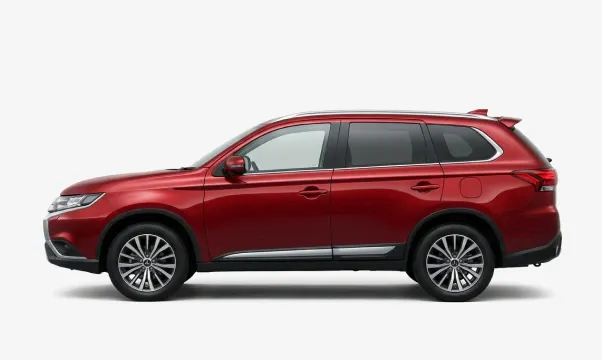
Nissan X-TrailBMW X5Mitsubishi Outlander
Mandai score
7/10
9/10
8/10
Typical price
KSh 3,450,000
KSh 6,800,000
KSh 4,200,000
Years
2017-2023
2017-2023
2017-2023
Body type
Mid-size SUV
–
Mid-size SUV
Fuel
Petrol, Hybrid
Petrol, Diesel, Plug-in hybrid
Petrol, Plug-in hybrid
Transmission
Automatic, CVT
Automatic
Automatic, CVT
Doors
5
5
5
Most popular trim
X-Trail 20X 4WD / Hybrid / e-Power e-4ORCE
X5 xDrive30d M Sport / xDrive40i M Sport
Outlander 2.4 G 7-Seat / PHEV G Premium 5-Seat
Dealer listings
None listed
None listed
None listed
Fuel and running cost
Trim
Nissan X-Trail 2.0L Petrol / e-Power
Standard
Fuel consumption
19.8 km/L5.1 L/100km combined · about 1188 km a tank
14.2 km/L7.0 L/100km combined · about 1136 km a tank
13.5 km/L7.4 L/100km combined · about 810 km a tank
Running cost
KSh 1,146 / 100 kmKSh 11 a km · KSh 11,463 for 1,000 km · petrol
KSh 1,598 / 100 kmKSh 16 a km · KSh 15,983 for 1,000 km · petrol
KSh 1,681 / 100 kmKSh 17 a km · KSh 16,812 for 1,000 km · petrol
Dimensions
Length
4,690 mm
4,922 mm
4,695 mm (3rd Gen) / 4,710 mm (4th Gen)
Width
1,820 mm
2,004 mm
1,810 mm (3rd Gen) / 1,862 mm (4th Gen)
Height
1,740 mm
1,745 mm
1,710 mm (3rd Gen) / 1,740 mm (4th Gen)
Wheelbase
2,705 mm
2,975 mm
2,670 mm (3rd Gen) / 2,706 mm (4th Gen)
Ground clearance
210 mm
214 mm
190 mm (3rd Gen) / 210 mm (4th Gen)
Boot space
565 L (5-seater) / 135 L (7-seater expanded to 950 L)
650 L (5-seater expanded to 1,870 L)
550 L (5-seater PHEV) / 128 L (7-seater expanded to 880 L)
Kerb weight
1,570 kg
2,110 kg
1,530 kg (Petrol) / 1,890 kg (PHEV)
Seats
5 or 7
5 or 7
5 or 7
Specifications
Engine
2.0L MR20DD 4-Cylinder Petrol / 1.5L VC-Turbo e-Power
3.0L B57 TwinPower Diesel / 3.0L B58 Turbo Petrol
2.4L 4B12 MIVEC Petrol / Twin Motor PHEV
Power
147 hp @ 6,000 rpm (2.0L) / 213 hp e-4ORCE combined
265 hp (30d) / 340 hp (40i) / 523 hp (M50i)
169 hp (Petrol) / 221 hp combined (PHEV)
Torque
207 Nm @ 4,400 rpm / 330 Nm electric torque
620 Nm (30d) / 450 Nm (40i) / 750 Nm (M50i)
222 Nm (Petrol) / 332 Nm combined (PHEV)
Drivetrain
FWD or All-Mode 4x4-i / e-4ORCE AWD
Intelligent xDrive AWD
FWD or Super All-Wheel Control (S-AWC 4WD)
0–100 km/h
10.5 sec (2.0L) / 7.0 sec (e-4ORCE)
4.3 sec (M50i) – 6.5 sec (30d)
8.2 sec (PHEV) – 9.8 sec (Petrol)
Top speed
190 km/h
230 km/h – 250 km/h
195 km/h
Fuel economy
Combined
16.0 km/L (2.0L) / 19.8 km/L (e-Power)
14.2 km/L (xDrive30d) / 11.0 km/L (xDrive40i)
13.5 km/L (Petrol) / 20.0+ km/L (PHEV Hybrid mode) / 50.0 km/L (PHEV Combined)
City
13.5 km/L (2.0L) / 19.0 km/L (e-Power)
11.5 km/L (xDrive30d) / 8.8 km/L (xDrive40i)
11.2 km/L (Petrol) / 55–80 km pure EV range (PHEV)
Highway
18.2 km/L (2.0L) / 20.5 km/L (e-Power)
16.5 km/L (xDrive30d) / 13.2 km/L (xDrive40i)
15.8 km/L (Petrol) / 22.0 km/L (PHEV)
Tank size
60 L
80 L
60 L (Petrol) / 45 L (PHEV)
CO₂ emissions
142 g/km
175 g/km (30d) / 200 g/km (40i)
148 g/km (Petrol) / 40 g/km (PHEV)
At a glance
Model
Nissan X-Trail (T32 / T33 Series)
BMW X5 (F15 / G05 Series)
Mitsubishi Outlander (GF / GG / GN Series)
Production years
2017–2023
2017–2023
2017–2023
Body type
SUV / Crossovers
5-Door Luxury Executive SUV
5-Door 5/7-Seater Crossover SUV
Seating capacity
5 or 7
5 or 7
5 or 7
Fuel types
Petrol, Hybrid (e-Power)
Clean Diesel, Petrol, Plug-In Hybrid
Petrol, Plug-In Hybrid (PHEV)
Engine sizes
1,497 cc (1.5T e-Power) / 1,997 cc (2.0L MR20DD)
2,993 cc (3.0L Diesel) / 2,998 cc (3.0L Petrol) / 4,395 cc (4.4L V8)
1,998 cc / 2,359 cc / 2,488 cc
Transmission
Automatic (CVT / e-CVT)
8-Speed Steptronic Sport Automatic
CVT Automatic / Fixed Gear (PHEV)
Drivetrain
FWD or All-Mode 4x4-i / e-4ORCE AWD
Intelligent xDrive AWD
FWD or Super All-Wheel Control (S-AWC 4WD)
Ground clearance
210 mm
214 mm
190 mm (3rd Gen) / 210 mm (4th Gen)
Source market
Japan / UK (RHD)
UK / Japan (RHD)
UK / Japan (RHD)
Pros and cons
What’s good
- Selectable All-Mode 4x4-i / e-4ORCE: Lockable 4WD mode provides excellent mud and sand traction.
- High 210 mm ground clearance: Easily clears deep ruts and unpaved upcountry tracks.
- Sub-2,000 cc KRA tax advantage: Qualifies for 25% excise duty rate (saving over 3.0L SUVs).
- Massive low-end diesel torque: 620 Nm output delivers effortless highway overtaking power.
- High 214 mm ground clearance: Easily tackles unpaved estate tracks and deep upcountry ruts.
- Optional 3rd row / 7-seater layout: Provides extra seating versatility for larger family transfers.
- Sub-2,500 cc KRA tax bracket savings across all models.
- 50–80 km pure EV zero-emission commuting on PHEV.
- Standard 7-seat layout on petrol variants.
What’s not so good
- Third-row legroom: 7-seater third row is best reserved for children or short trips.
- CVT fluid service interval: Xtronic CVT requires genuine NS-3 fluid replacement every 40,000 km.
- High KRA customs valuation: 3.0L+ engines trigger the 35% excise duty tax bracket.
- Wide 2.0-meter body width: Requires extra care when parking in narrow commercial bays.
- PHEV is strictly a 5-seater due to rear motor battery pack placement under boot floor.
- CVT rubber-band effect under heavy mountain climbs.