
Compare cars
Pick up to 3 cars to see how they stack up on score, price and specs.
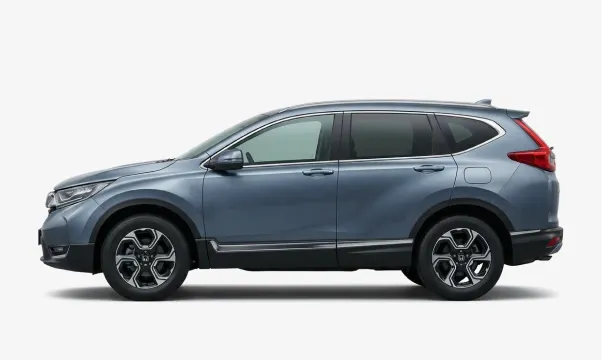
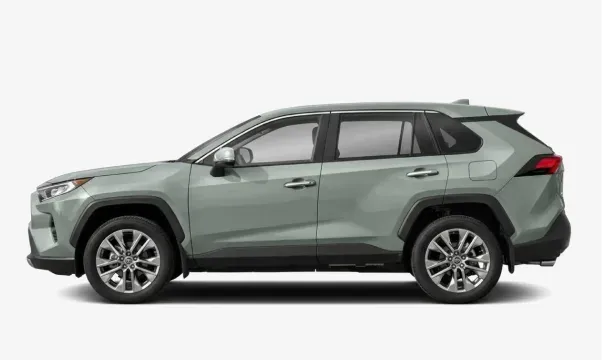
Honda CR-VToyota RAV4
Mandai score
9/10
9/10
Typical price
KSh 4,500,000
KSh 4,800,000
Years
2017-2023
2019-2023
Body type
–
Mid-size SUV
Fuel
Petrol, Hybrid
Petrol, Hybrid
Transmission
Automatic, CVT
Automatic, CVT
Doors
5
5
Most popular trim
CR-V 1.5T EX Masterpiece / 2.0L e:HEV Hybrid
RAV4 2.0 Adventure / 2.5 Hybrid G / Limited E-Four
Dealer listings
None listed
None listed
Dimensions
Length
4,605 mm
4,600 mm (Adventure: 4,610 mm)
Width
1,855 mm
1,855 mm (Adventure: 1,865 mm)
Height
1,680 mm
1,685 mm
Wheelbase
2,660 mm
2,690 mm
Ground clearance
208 mm
200 mm
Boot space
561 L (5-seater) / 150 L (7-seater expanded to 967 L)
580 L (1,690 L folded)
Kerb weight
1,580 kg
1,570 kg (1,680 kg Hybrid)
Seats
5 or 7
5
Specifications
Engine
1.5L VTEC Turbo / 2.0L-2.4L NA i-VTEC / 2.0L e:HEV Hybrid
2.0L M20A-FKS Dynamic Force / 2.5L A25A-FXS Hybrid
Power
184 hp to 190 hp (Variant dependent)
171 hp (2.0L) / 222 hp combined (2.5L Hybrid E-Four)
Torque
175 Nm to 315 Nm (Electric motor combined torque)
207 Nm (2.0L) / 221 Nm (2.5L Hybrid)
Drivetrain
Real Time AWD / FWD
Front-Wheel Drive / Dynamic Torque Vectoring AWD / E-Four
0–100 km/h
8.8 sec (1.5T) / 8.6 sec (e:HEV)
8.1 sec (2.5L Hybrid) / 9.5 sec (2.0L)
Top speed
200 km/h
200 km/h
Fuel economy
Combined
14.5 km/L (1.5T) / 13.0 km/L (2.0L/2.4L NA) / 21.0 km/L (e:HEV Hybrid)
15.2 km/L (2.0L Petrol) / 21.0 km/L (2.5L Hybrid)
City
12.0 km/L (1.5T) / 10.5 km/L (2.0L/2.4L NA) / 20.0 km/L (e:HEV Hybrid)
12.8 km/L (2.0L Petrol) / 20.0 km/L (2.5L Hybrid)
Highway
16.8 km/L (1.5T) / 15.5 km/L (2.0L/2.4L NA) / 22.0 km/L (e:HEV Hybrid)
17.5 km/L (2.0L Petrol) / 22.0 km/L (2.5L Hybrid)
Tank size
57 L
55 L
CO₂ emissions
143 g/km (1.5T) / 114 g/km (e:HEV)
138 g/km (2.0L) / 102 g/km (Hybrid)
At a glance
Model
Honda CR-V (RW1/RW2 & RT5/RT6 Series)
Toyota RAV4 (XA50 Series)
Production years
2017–2023
2019–2023
Body type
5-Door 5/7-Seater Executive SUV
5-Door Compact Utility Crossover
Seating capacity
5 or 7
5
Fuel types
Petrol (VTEC Turbo / NA i-VTEC), Full Hybrid (e:HEV)
Petrol (Dynamic Force), Full Hybrid (THS-II)
Engine sizes
1,496 cc / 1,993 cc / 2,354 cc
1,986 cc (2.0L M20A-FKS) / 2,487 cc (2.5L A25A-FXS Hybrid)
Transmission
CVT Automatic / Single-Speed e-CVT
Direct Shift-CVT / e-CVT
Drivetrain
FWD or Real Time AWD
FWD or Dynamic Torque Vectoring AWD / E-Four
Ground clearance
208 mm
200 mm
Source market
Japan / UK (RHD)
Japan / UK (RHD)
Pros and cons
What’s good
- Sub-2,500 cc tax bracket advantage: All 1.5T, 2.0L, 2.4L, and Hybrid engines qualify for the lower 25% KRA excise tax rate.
- High 208 mm ground clearance: Easily clears deep potholes, tall speed bumps, and rough upcountry murram tracks.
- Earth Dreams 1.5T climbing torque: Maintains altitude power up the Rift Valley escarpment without sluggishness.
- Optional 7-seater layout: Provides third-row versatility for growing families without stepping up to a large MPV.
- Modern TNGA platform entry: Superior chassis rigidity, sharp handling, and excellent ride refinement on local roads.
- Sub-2,500 cc KRA duty advantage: All 2.0L Petrol and 2.5L Hybrid variants qualify for the lower 25% excise tax bracket.
- High 200 mm ground clearance: Easily clears deep potholes, tall speed bumps, and rough upcountry estate roads.
- 21.0 km/L hybrid efficiency: Exceptional fuel savings in heavy Nairobi bumper-to-bumper traffic jams.
What’s not so good
- Firm ride on 18-inch Masterpiece alloys: Transmits minor vibrations on corrugated unpaved roads.
- CVT engine revs on heavy mountain climbs: Non-hybrid CVT holds elevated engine revs during steep highway passes.
- High KRA CRSP customs valuation: Substantial import duty investment compared to earlier 4th-gen RAV4 models.
- Wind noise at high highway speeds: Minor cabin wind rustle around side mirrors over 120 km/h.