
Compare cars
Pick up to 3 cars to see how they stack up on score, price and specs.
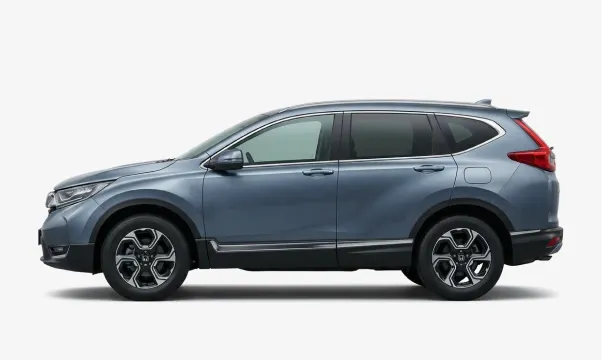
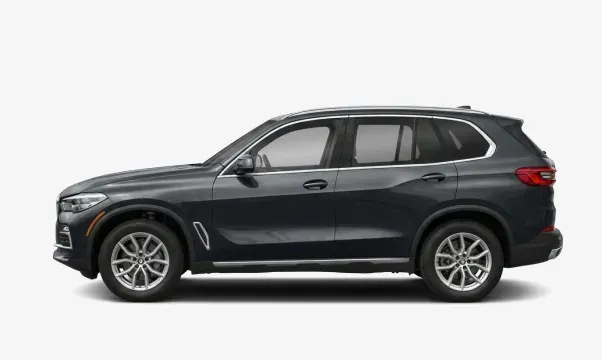
Honda CR-VBMW X5
Mandai score
9/10
9/10
Typical price
KSh 4,500,000
KSh 6,800,000
Years
2017-2023
2017-2023
Fuel
Petrol, Hybrid
Petrol, Diesel, Plug-in hybrid
Transmission
Automatic, CVT
Automatic
Doors
5
5
Most popular trim
CR-V 1.5T EX Masterpiece / 2.0L e:HEV Hybrid
X5 xDrive30d M Sport / xDrive40i M Sport
Dealer listings
None listed
None listed
Fuel and running cost
Trim
Standard
Fuel consumption
14.5 km/L6.9 L/100km combined · about 827 km a tank
14.2 km/L7.0 L/100km combined · about 1136 km a tank
Running cost
KSh 1,565 / 100 kmKSh 16 a km · KSh 15,652 for 1,000 km · petrol
KSh 1,598 / 100 kmKSh 16 a km · KSh 15,983 for 1,000 km · petrol
Dimensions
Length
4,605 mm
4,922 mm
Width
1,855 mm
2,004 mm
Height
1,680 mm
1,745 mm
Wheelbase
2,660 mm
2,975 mm
Ground clearance
208 mm
214 mm
Boot space
561 L (5-seater) / 150 L (7-seater expanded to 967 L)
650 L (5-seater expanded to 1,870 L)
Kerb weight
1,580 kg
2,110 kg
Seats
5 or 7
5 or 7
Specifications
Engine
1.5L VTEC Turbo / 2.0L-2.4L NA i-VTEC / 2.0L e:HEV Hybrid
3.0L B57 TwinPower Diesel / 3.0L B58 Turbo Petrol
Power
184 hp to 190 hp (Variant dependent)
265 hp (30d) / 340 hp (40i) / 523 hp (M50i)
Torque
175 Nm to 315 Nm (Electric motor combined torque)
620 Nm (30d) / 450 Nm (40i) / 750 Nm (M50i)
Drivetrain
Real Time AWD / FWD
Intelligent xDrive AWD
0–100 km/h
8.8 sec (1.5T) / 8.6 sec (e:HEV)
4.3 sec (M50i) – 6.5 sec (30d)
Top speed
200 km/h
230 km/h – 250 km/h
Fuel economy
Combined
14.5 km/L (1.5T) / 13.0 km/L (2.0L/2.4L NA) / 21.0 km/L (e:HEV Hybrid)
14.2 km/L (xDrive30d) / 11.0 km/L (xDrive40i)
City
12.0 km/L (1.5T) / 10.5 km/L (2.0L/2.4L NA) / 20.0 km/L (e:HEV Hybrid)
11.5 km/L (xDrive30d) / 8.8 km/L (xDrive40i)
Highway
16.8 km/L (1.5T) / 15.5 km/L (2.0L/2.4L NA) / 22.0 km/L (e:HEV Hybrid)
16.5 km/L (xDrive30d) / 13.2 km/L (xDrive40i)
Tank size
57 L
80 L
CO₂ emissions
143 g/km (1.5T) / 114 g/km (e:HEV)
175 g/km (30d) / 200 g/km (40i)
At a glance
Model
Honda CR-V (RW1/RW2 & RT5/RT6 Series)
BMW X5 (F15 / G05 Series)
Production years
2017–2023
2017–2023
Body type
5-Door 5/7-Seater Executive SUV
5-Door Luxury Executive SUV
Seating capacity
5 or 7
5 or 7
Fuel types
Petrol (VTEC Turbo / NA i-VTEC), Full Hybrid (e:HEV)
Clean Diesel, Petrol, Plug-In Hybrid
Engine sizes
1,496 cc / 1,993 cc / 2,354 cc
2,993 cc (3.0L Diesel) / 2,998 cc (3.0L Petrol) / 4,395 cc (4.4L V8)
Transmission
CVT Automatic / Single-Speed e-CVT
8-Speed Steptronic Sport Automatic
Drivetrain
FWD or Real Time AWD
Intelligent xDrive AWD
Ground clearance
208 mm
214 mm
Source market
Japan / UK (RHD)
UK / Japan (RHD)
Pros and cons
What’s good
- Sub-2,500 cc tax bracket advantage: All 1.5T, 2.0L, 2.4L, and Hybrid engines qualify for the lower 25% KRA excise tax rate.
- High 208 mm ground clearance: Easily clears deep potholes, tall speed bumps, and rough upcountry murram tracks.
- Earth Dreams 1.5T climbing torque: Maintains altitude power up the Rift Valley escarpment without sluggishness.
- Optional 7-seater layout: Provides third-row versatility for growing families without stepping up to a large MPV.
- Massive low-end diesel torque: 620 Nm output delivers effortless highway overtaking power.
- High 214 mm ground clearance: Easily tackles unpaved estate tracks and deep upcountry ruts.
- Optional 3rd row / 7-seater layout: Provides extra seating versatility for larger family transfers.
What’s not so good
- Firm ride on 18-inch Masterpiece alloys: Transmits minor vibrations on corrugated unpaved roads.
- CVT engine revs on heavy mountain climbs: Non-hybrid CVT holds elevated engine revs during steep highway passes.
- High KRA customs valuation: 3.0L+ engines trigger the 35% excise duty tax bracket.
- Wide 2.0-meter body width: Requires extra care when parking in narrow commercial bays.