
Compare cars
Pick up to 3 cars to see how they stack up on score, price and specs.
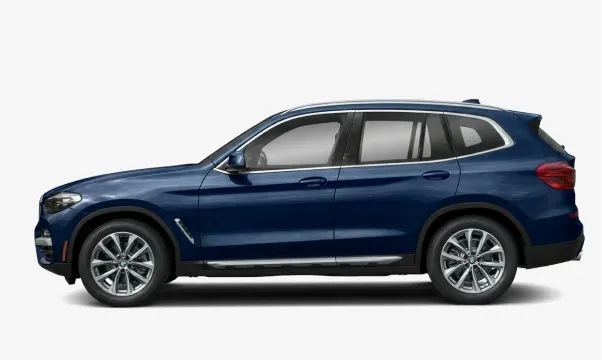
BMW X3
Versatile premium compact SUV with xDrive AWD, 204 mm ground clearance, and sub-2,000 cc diesel efficiency.
Highest rated
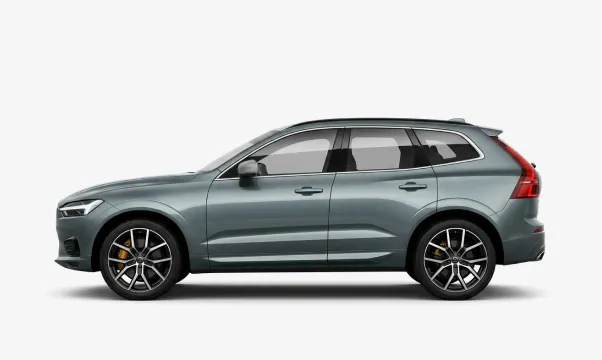
BMW X3Volvo XC60
Mandai score
8/10
7/10
Typical price
KSh 49,000,008,200,000
KSh 6,800,000
Years
2017-2023
2017-2023
Body type
Mid-size SUV
Mid-size SUV
Fuel
Petrol, Diesel
Petrol, Diesel, Plug-in hybrid
Transmission
Automatic
Automatic
Doors
5
5
Most popular trim
X3 xDrive20d M Sport / xDrive30i M Sport
XC60 D4 / D5 AWD R-Design / T5 AWD Inscription / T8 Recharge PHEV
Dealer listings
None listed
None listed
Dimensions
Length
4,708 mm
4,688 mm
Width
1,891 mm
1,902 mm
Height
1,676 mm
1,658 mm
Wheelbase
2,864 mm
2,865 mm
Ground clearance
204 mm
216 mm (250 mm Air)
Boot space
550 L (1,600 L folded)
505 L (1,432 L folded)
Kerb weight
1,750 kg
1,815 kg (2,150 kg T8 Recharge)
Seats
5
5
Specifications
Engine
2.0L B47 Turbo Diesel / 2.0L B48 Turbo Petrol
2.0L D4/D5 Twin-Turbo Clean Diesel / 2.0L T5 Turbo Petrol / 2.0L T8 PHEV
Power
190 hp @ 4,000 rpm (20d) / 252 hp @ 5,200 rpm (30i)
190 hp (D4) / 235 hp (D5) / 250 hp (T5) / 407–455 hp combined (T8 PHEV)
Torque
400 Nm @ 1,750–2,500 rpm (20d) / 350 Nm (30i)
400 Nm (D4) / 480 Nm (D5) / 350 Nm (T5) / 640–709 Nm (T8 PHEV)
Drivetrain
Intelligent xDrive AWD
Front-Wheel Drive / BorgWarner AWD
0–100 km/h
6.3 sec (30i) – 8.0 sec (20d)
4.9 sec (T8 PHEV) / 6.8 sec (T5) / 7.2 sec (D5)
Top speed
213 km/h – 240 km/h
220 km/h (electronically limited to 180 km/h from 2021)
Fuel economy
Combined
16.2 km/L (xDrive20d) / 12.8 km/L (xDrive30i)
18.2 km/L (D4 Diesel) / 13.8 km/L (T5 Petrol) / 38.0 km/L equivalent (T8 PHEV)
City
13.8 km/L (xDrive20d) / 10.2 km/L (xDrive30i)
15.5 km/L (D4 Diesel) / 11.2 km/L (T5 Petrol) / 50 km pure EV range (T8 PHEV)
Highway
18.5 km/L (xDrive20d) / 15.0 km/L (xDrive30i)
20.5 km/L (D4 Diesel) / 16.5 km/L (T5 Petrol) / 20.0 km/L (T8 PHEV hybrid mode)
Tank size
68 L
71 L (Petrol/Diesel) / 50 L (T8 PHEV)
CO₂ emissions
138 g/km (20d) / 168 g/km (30i)
144 g/km (D4) / 49 g/km (T8 PHEV)
At a glance
Model
BMW X3 (G01 Series)
Volvo XC60 (SPA Platform)
Production years
2017–2023
2017–2023
Body type
5-Door Premium Compact Crossover
5-Door Mid-Size Executive Luxury Crossover
Seating capacity
5
5
Fuel types
Clean Diesel, Petrol
Petrol, Clean Diesel, Plug-In Hybrid (T8 Recharge)
Engine sizes
1,995 cc (2.0L Diesel) / 1,998 cc (2.0L Petrol)
1,969 cc (2.0L T5 / T6 / D4 / D5 / T8 PHEV)
Transmission
8-Speed Steptronic Automatic
8-Speed Geartronic Automatic
Drivetrain
Intelligent xDrive AWD
FWD or BorgWarner AWD
Ground clearance
204 mm
216 mm (up to 250 mm with Air Suspension)
Source market
UK / Japan (RHD)
UK / Japan (RHD)
Pros and cons
What’s good
- High 204 mm ground clearance: Confidently clears deep ruts, tall speed bumps, and rough upcountry roads.
- Sub-2,000 cc tax advantage: Both 2.0L diesel and petrol engines qualify for 25% KRA excise tax rate.
- Practical 550 L boot space: Generous cargo capacity expanding to 1,600 L with 40:20:40 split rear seats.
- Phenomenal ride isolation and quiet cabin: Suppresses road noise and vibration on rough unpaved roads.
- Sub-2,000 cc KRA duty advantage: Entire 2.0L petrol, diesel, and T8 PHEV lineup qualifies for the lower 25% excise tax bracket.
- High 216 mm ground clearance: Easily clears deep potholes, tall speed bumps, and rough upcountry estate roads.
- 407–455 hp T8 Recharge PHEV performance: Launches 0–100 km/h in 4.9 seconds with zero-emission city commuting.
What’s not so good
- Firm ride on 20-inch M Sport wheels: Low-profile tires transmit road roughness over corrugated gravel tracks.
- DPF filter maintenance: 2.0L diesel models require periodic long highway runs to clean particulate filters.
- High CRSP customs valuation: Import tax duty represents a solid luxury investment.
- Optional air suspension compressor care: Rear air bellows require inspection over rough roads.