
Compare cars
Pick up to 3 cars to see how they stack up on score, price and specs.
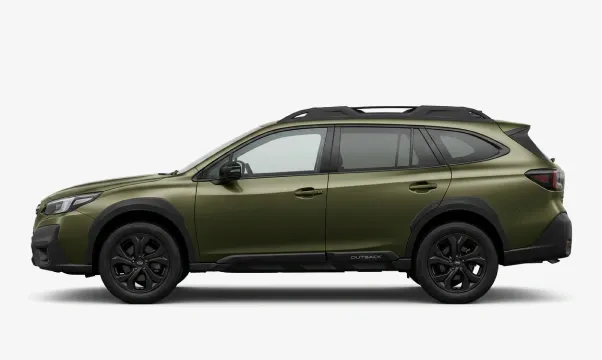
Subaru Outback
The definitive estate tourer featuring 213–220 mm ground clearance, exceptional long-distance ride comfort, and sub-2,500 cc duty savings.
Highest ratedBest value
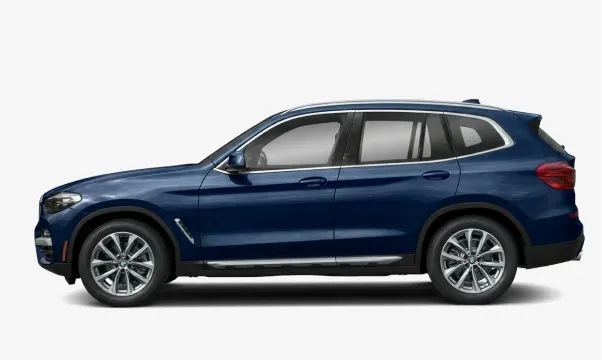
BMW X3Subaru Outback
Mandai score
8/10
8.5/10
Typical price
KSh 4,900,000
KSh 4,150,000
Years
2017-2023
2017-2023
Body type
Mid-size SUV
Mid-size SUV
Fuel
Petrol, Diesel
Petrol
Transmission
Automatic
Automatic, CVT
Doors
5
5
Most popular trim
X3 xDrive20d M Sport / xDrive30i M Sport
Outback Limited / Touring / X-Break / XT 2.4 Turbo
Dealer listings
None listed
None listed
Fuel and running cost
Fuel consumption
16.2 km/L6.2 L/100km combined · about 1102 km a tank
14.0 km/L7.1 L/100km combined · about 882 km a tank
Running cost
KSh 1,401 / 100 kmKSh 14 a km · KSh 14,010 for 1,000 km · petrol
KSh 1,621 / 100 kmKSh 16 a km · KSh 16,211 for 1,000 km · petrol
Dimensions
Length
4,708 mm
4,870 mm
Width
1,891 mm
1,875 mm
Height
1,676 mm
1,675 mm
Wheelbase
2,864 mm
2,745 mm
Ground clearance
204 mm
213 mm (BS) / 220 mm (BT)
Boot space
550 L (1,600 L folded)
522 L (1,800 L folded)
Kerb weight
1,750 kg
1,620 kg
Seats
5
5
Specifications
Engine
2.0L B47 Turbo Diesel / 2.0L B48 Turbo Petrol
2.5L FB25 Direct Injection Boxer / 2.4L FA24 Turbo
Power
190 hp @ 4,000 rpm (20d) / 252 hp @ 5,200 rpm (30i)
182 hp @ 5,800 rpm (2.5L) / 260 hp (2.4T)
Torque
400 Nm @ 1,750–2,500 rpm (20d) / 350 Nm (30i)
239 Nm @ 4,400 rpm (2.5L) / 376 Nm (2.4T)
Drivetrain
Intelligent xDrive AWD
Symmetrical All-Wheel Drive (SAWD)
0–100 km/h
6.3 sec (30i) – 8.0 sec (20d)
8.6 sec (2.5L) / 6.3 sec (2.4T)
Top speed
213 km/h – 240 km/h
210 km/h
Fuel economy
Combined
16.2 km/L (xDrive20d) / 12.8 km/L (xDrive30i)
14.0 km/L (2.5L) / 11.8 km/L (2.4T)
City
13.8 km/L (xDrive20d) / 10.2 km/L (xDrive30i)
11.2 km/L (2.5L) / 9.2 km/L (2.4T)
Highway
18.5 km/L (xDrive20d) / 15.0 km/L (xDrive30i)
16.5 km/L (2.5L) / 14.5 km/L (2.4T)
Tank size
68 L
63 L
CO₂ emissions
138 g/km (20d) / 168 g/km (30i)
161 g/km
At a glance
Model
BMW X3 (G01 Series)
Subaru Outback (BS / BT Series)
Production years
2017–2023
2017–2023
Body type
5-Door Premium Compact Crossover
Estate Crossover Tourer
Seating capacity
5
5
Fuel types
Clean Diesel, Petrol
Petrol
Engine sizes
1,995 cc (2.0L Diesel) / 1,998 cc (2.0L Petrol)
2,498 cc (2.5L FB25) / 2,387 cc (2.4T FA24)
Transmission
8-Speed Steptronic Automatic
Automatic (Lineartronic CVT)
Drivetrain
Intelligent xDrive AWD
Symmetrical All-Wheel Drive (SAWD)
Ground clearance
204 mm
213 mm (BS) / 220 mm (BT)
Source market
UK / Japan (RHD)
Japan / UK (RHD)
Pros and cons
What’s good
- High 204 mm ground clearance: Confidently clears deep ruts, tall speed bumps, and rough upcountry roads.
- Sub-2,000 cc tax advantage: Both 2.0L diesel and petrol engines qualify for 25% KRA excise tax rate.
- Practical 550 L boot space: Generous cargo capacity expanding to 1,600 L with 40:20:40 split rear seats.
- Exceptional long-distance ride comfort: Plush suspension absorbs upcountry road ripples effortlessly.
- High 213–220 mm ground clearance: Easily tackles unpaved murram roads, ruts, and deep puddles.
- Sub-2,500 cc KRA tax advantage: Both 2.5L and 2.4T engines qualify for 25% excise tax bracket.
What’s not so good
- Firm ride on 20-inch M Sport wheels: Low-profile tires transmit road roughness over corrugated gravel tracks.
- DPF filter maintenance: 2.0L diesel models require periodic long highway runs to clean particulate filters.
- Long 4.87-meter overall length: Requires care when parallel parking in tight Nairobi streets.
- Lineartronic CVT under towing: Demands auxiliary CVT fluid cooler for heavy trailer towing.